
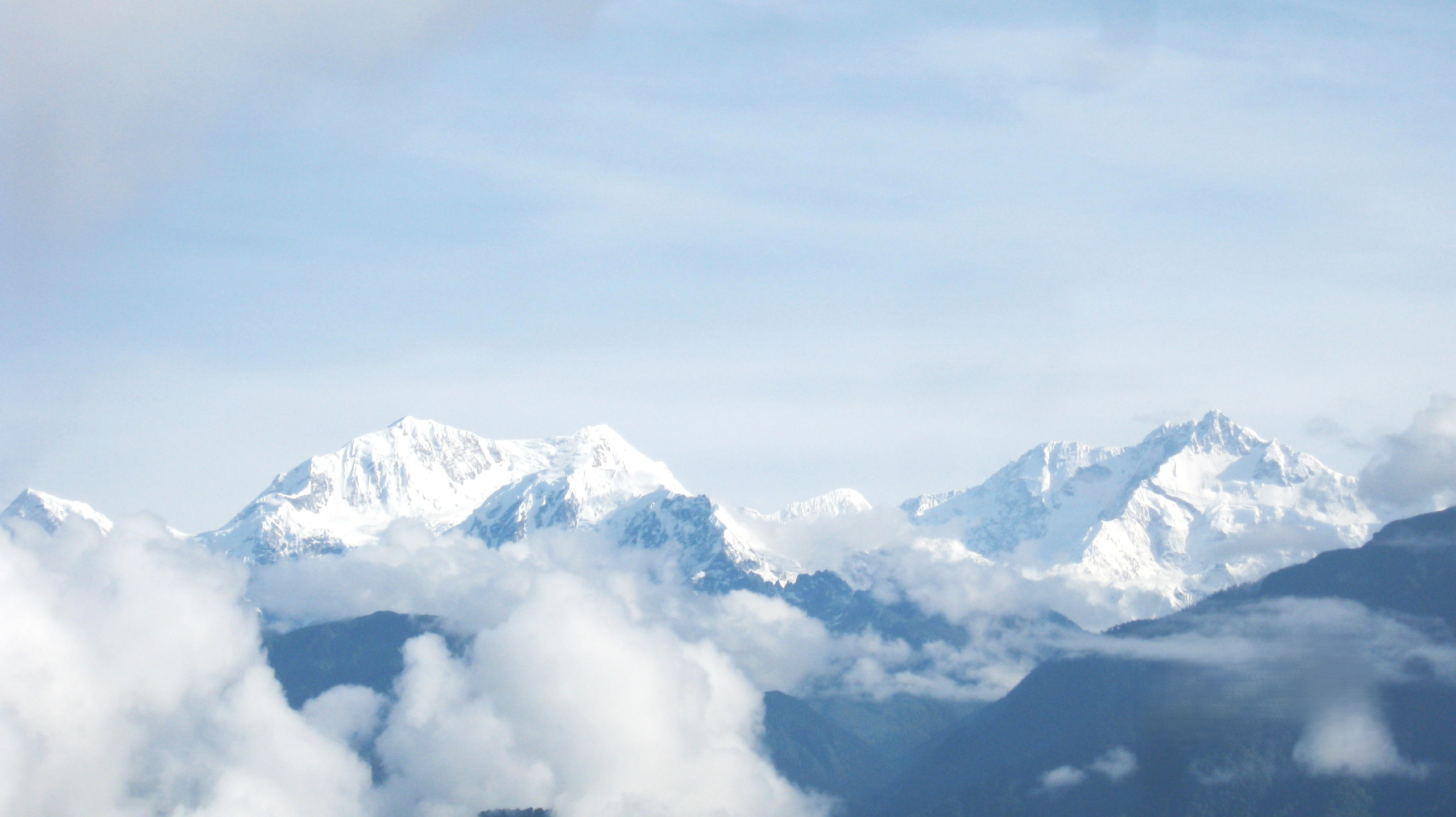
Holidays can be nerve-wracking experiences. Many trips in the past have proved resounding disasters, and after all the expense and travel, the lugging around of baggage and kids who intone- I want to go home, I’ve realized that home, where you can steal snatches of rest, would have indeed been the best place to relax .It was therefore, not without misgivings that we launched on another compulsive journey trying to convince our unimpressed children, who are six and ten, how adventurous and exciting the trip would be.
We arrived in Sikkim, which proclaimed itself very simply, sans adjective, sans flourish — The land of peace and tranquility, in the state-sponsored signs that greet the tourists. Somewhere else is tucked in another sign: Sikkim: The Switzerland of the East.
Entering through the check post at Rangpo, green cascading hills, flowers in stunning hues and fluttering prayer flags crowd the eye. Gangtok and our hotel in the bazaar came into view and our spirits sank — the colour transparencies were indeed better. But we were in the heart of the Himalayas having escaped Chennai’s hottest summer, in decades — the weather was lovely. Also we could afford to feel a little exclusive as not everybody and their cousin had headed for here. Our destination was to be North Sikkim, enticed as we were by the blurbs — yak country, rhododendrons and snow-clad mountains. The travel agents around Gangtok know their business and can mystify the tourist with requirements of permits-police-military and
four-wheel-drive vehicles, and promise you pine cottages up there. In short, it would cost you the earth to go up the mountains. So we haggled till we thought we got a good deal with inputs from the girl at the desk, the waiter and the room boy.
Yumthang at 11,600 feet above sea level is a five-hour drive from Gangtok. We packed ourselves into a sturdy Sumo to ride through the mountains of airbrushed conifers and foaming torrents of waterfalls. There is an indelible magic in the confluence of the elements — the whiteness of the water, the emerald hills and the chill air.
The Border Roads Organisation (BRO), that commendable force, has made these remote areas accessible and is eloquently present all over the hills. Ever wondered who defied death to make these roads, they ask, and then ad-lib, we cut through hills to join hearts. All along the way are exhortations against the evils of speed and liquor and overload. The BRO versifiers who can turn a phrase and wring a rhyme go into overdrive with suggestive ones: Be gentle on my curves. And how is this for sheer poetry:
After whisky, driving is risky, Don’t fly, only ply, Be Mr. Late, not late Mr, If married, divorce speed.
A Glimpse of the Slopes
My all-time favorite, however, is this one: On the bend [read: down the bend] go slow, friend, which I am convinced was put out there by a prophetic writer of signposts with the heart of a compassionate monk to nudge me and others like me, of the fragile mental state, to take it easy!
Our guide a laid-back Sikkimese student, whose actual calling seemed to be that of a DJ, kindled in us a hitherto unknown appreciation for Boyzone, which he chose to blast on the stereo on the long and rainy drive up the mountains. Otherwise he remained unobtrusive, telling us all he thought we ought to know about Sikkim in about two sentences. But he made up for all possible deficiencies by an exquisite courtesy.
Lachung was the village where we halted for the night. The Sikkimese version of the bread-and-breakfast outfits are tiny, warm rooms above a shop cum residence. The food was utterly delicious. Wind chimes, which we have now imported into our homes, hang at the doorsteps with an authenticity of faith. Tashi Delek — Good Luck. A profusion of flowering plants crowd the balconies and mushroom out of windowsills. The pink-cheeked women with their turquoise ornaments exude an austere beauty.
The bulb, which had glimmered at the start of the evening, now flickers out of existence. This is a regular feature we are informed, and this is the constituency of the minister who holds the power portfolio.
What remains now is the sound of the river, the Teesta — the Tashita or the auspicious one — which runs along the length of the village. It is an azure green with deposits of pebbles on its banks. The waters are icy and nobody ventures bathing; but a splash on the face is bracing. History tells us that civilizations grew on the banks of rivers, with man harnessing the waters for his use. Sikkim is rice- country but cultivation was for consumption. Without having studied history in depth, I would take a guess that here emerged a civilization in harmony with their environment — without monuments to man’s vainglory-palaces and parliaments and fortifications — as here lived a people who revered and preserved nature.
The green mountains contoured by the snow-capped peaks line the road to Yumthang. Waterfalls nestling on the folds of the mountains plunge into the lush valley where mountain flowers hide in the grass. The waters that gather froth over the boulders strewn midstream the Teesta now closer to her mountain stream origins.Time seems frozen in the flow.
At the risk of sounding like a throwback to the romantic poets of the 18th century in our blasé rap age, I hazard this — the call of the mountains is that their immensity and grandeur shows us up as insignificant and inconsequential. And that strain of thought quashes a million worries and is peace-filling.
The journey to Nathula takes us14000 feet above sea level. These mountains of the East are more rock, unlike the green mountains of the North. But the rocks are speckled with tufts of snow and have a beauty all of their own. A two-and-a-half-hour drive from Gangtok, the Nathula Pass bordering China is restricted by entry passes, but a detour takes us to the Baba Mandir where a temple stands erected in the memory of a startlingly young jawan who died on duty. His blessings are invoked by civilians as well as the men in uniform.
On the drive back, we stop over at the Tsomgo lake, 12400 feet above sea level. The clear waters are considered sacred and reflect the color of the mountains. There are Yak rides and mementoes to shop for.
The tradition and spirit of Sikkim and its Tibetan Buddhist heritage are best preserved in its monasteries. But ask a question and the denominational details can be bewildering. So we contended ourselves with turning the prayer wheels in the niches that border these sprawling structures. They are peaceful, as silent churches and the young lamas with their shining faces swathed in robes seem to belong to another world. Maybe next time I will go on a monastic tour. What we saw of Sikkim in a week was maybe dilettantish, touristy stuff. But the experience was incandescent, simply blowing my mind away. For once the government babus who put up the sign, “Welcome to the land of peace and tranquility”, knew what they were talking about .
Geetha Ravichandran